24/7 National Emergency Water Heater Leak Dispatch & Rapid Replacement Network
When a residential or commercial water heater suffers a sudden catastrophic failure, property owners face an escalating race against time. An uncontained water heater breach discharges pressurized water at rates between 40 and 80 pounds per square inch (PSI), transforming a minor basement, utility closet, or attic leak into a full-scale structural disaster within minutes.
Water Heater Emergency Line serves as the nation's premier direct-response dispatch clearinghouse, coordinating rapid emergency containment, precision diagnostic inspection, and same-day system replacement across all fifty states. Operating under the umbrella of ThermalGuard Emergency Network, our centralized dispatch infrastructure functions twenty-four hours a day, seven days a week, and three hundred sixty-five days a year to bridge the critical gap between frantic homeowners and vetted, independent local plumbing specialists.
The National Infrastructure Behind Water Heater Emergency Line
Water Heater Emergency Line is operated and maintained by ThermalGuard Emergency Network, a specialized nationwide emergency dispatch consortium committed to setting the standard for rapid-response residential mechanical containment.
Founded on the principle that home utility crises require centralized, accountable triage rather than fragmented local searching, ThermalGuard Emergency Network functions as an independent clearinghouse linking property owners with qualified, third-party plumbing contractors across the continental United States, Alaska, and Hawaii.
Every participating contractor carries dedicated truck inventory capable of completing total tank decommission, haul-away, and new replacement installation during the very first visit.
The 60-Second Disaster Mitigation Protocol: How to Safely Shut Down a Leaking Water Heater
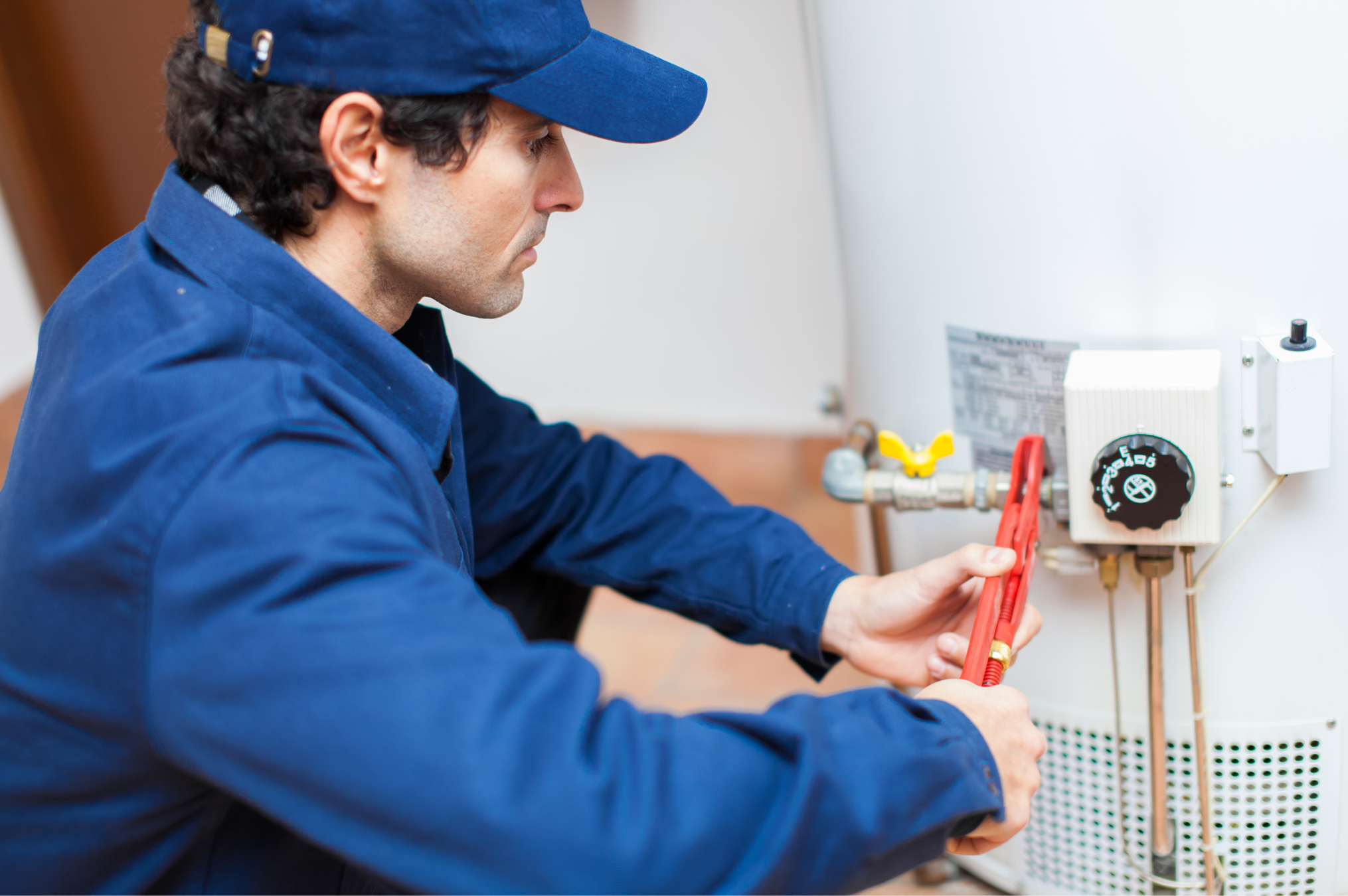
The moment you discover pooled water, dripping insulation, or active spraying surrounding your water heater, taking immediate containment action can prevent thousands of dollars in subfloor warping, mold colonization, and structural framing rot:
ISOLATE COLD WATER FEED
Locate the cold water shutoff valve directly above the tank. Turn the quarter-turn ball valve perpendicular to pipe, or rotate multi-turn gate valve fully clockwise to halt incoming 50–80 PSI municipal pressure.
DISCONNECT ENERGY SUPPLY
Switch off the dedicated 240V double-pole circuit breaker for electric tanks, or rotate gas control thermostat valve to OFF/PILOT to prevent dry firing, element melting, or fuel gas accumulation.
CALL 24/7 DISPATCH
Do not loosen brass drain valves or tamper with pressurized fittings. Immediately contact our 24/7 switchboard at (888) 861-1274 for rapid 20–30 minute master plumber mobilization.
Water Heater Leaking, Flooding, or Completely Out?
Do not wait for structural ceiling collapse, electrical fire, or black mold infestation. Dispatched independent master plumbers are on call with mobile replacement units.
DISPATCH EMERGENCY TECHNICIAN: (888) 861-1274Diagnostic Triage: Pinpointing Rusted Vessels Versus Serviceable Leaks
Consult this mechanical diagnostic matrix to evaluate active leak symptoms and determine whether replacement or repair is required:
| Visual / Auditory Symptom | Underlying Mechanical Cause | Required Emergency Action |
|---|---|---|
| Water pooling beneath lower jacket seams | Internal steel vessel breached from thermal expansion and protective glass enamel breakdown. | TERMINAL TANK FAILURE: Immediate Replacement |
| Active discharge from side T&P pipe | Excessive hydraulic pressure spikes from failed expansion tank or water overheating past 210°F. | PRESSURE HAZARD: T&P Valve & Expansion Check |
| Loud bubbling, popping, or rumbling sounds | Severe calcified mineral scale blanket insulating bottom burner pan, trapping boiling water pockets. | SEDIMENT INSULATION: Chemical/Mechanical Flush |
| Water leaking from top brass cold/hot nipples | Galvanic corrosion between dissimilar metals (copper to galvanized steel) or aging dielectric unions. | SERVICEABLE FITTING: Dielectric Union Swap |
| Rusty, orange, or discolored hot water | Sacrificial magnesium anode rod fully depleted; aggressive water chemistry actively attacking steel walls. | TANK WARNING: Urgent Anode Inspection |
How Municipal Water Chemistry and Mineral Hardness Accelerate Tank Failure
A primary mechanical driver of premature water heater failure across the United States is the direct, unyielding interaction between municipal water chemistry and heating equipment components. Water delivered to residential homes contains dissolved minerals, carbonates, chlorides, and suspended solids absorbed as rain filters through limestone bedrock, aquifers, and subterranean mineral strata.
When cold water enters a storage vessel and encounters high-temperature gas burner flames or electric immersion elements, dissolved calcium carbonate precipitates out as solid crystalline scale. This dense mineral barrier acts as an insulator, forcing the steel bottom plate to overheat far beyond its engineered tolerances, blistering the internal glass porcelain enamel lining and triggering premature seam fractures in 6 to 8 years.
Structural Installation Realities: Attic, Basement, and Garage Risks
The structural vulnerability of a home during a water heater leak is largely dictated by regional architectural construction styles. Across the American Sunbelt—prominently throughout Texas, Florida, and Arizona—millions of single-family residences feature water heaters placed inside unconditioned second-story attic spaces.
When an attic water heater ruptures, fifty gallons of water—supplemented by continuous municipal line pressure—immediately overwhelms shallow drip pans. Water cascades through attic ceiling joists, saturates insulation, and collapses sheetrock ceilings into living spaces below within sixty minutes.
In northern and midwestern subterranean basements, unaddressed leaks saturate subflooring, short out adjacent furnaces, and cultivate hazardous mold spores. ThermalGuard Emergency Network technicians arrive equipped specifically for your home's structural layout.
Specialized Emergency Water Heating Disciplines
ThermalGuard Emergency Network coordinates eight dedicated domestic water heating disciplines across all 50 states. Every service is fulfilled by verified, independent master plumbers with mobile replacement inventory.
Emergency Tank Replacement
Immediate removal of ruptured vessels and same-day installation of code-compliant gas or electric tanks.
Water Heater Leak Detection
Precision acoustic tracing and thermal imaging to isolate supply line weeping, hidden tank fractures, and slab leaks.
Same-Day Installation
Rapid deployment for residences experiencing complete hot water failure, restoring hot water within hours.
Tankless Water Heater Conversion
Converting storage tanks to high-efficiency continuous-flow tankless units with dedicated gas lines and direct venting.
Pressure Relief Valve Repair
Safety diagnostics and immediate replacement of seized, dripping, or actively blowing ASME-rated T&P valves.
Gas Water Heater Repair
Burner troubleshooting, pilot light recovery, thermocouple replacement, and gas control valve calibration.
Electric Water Heater Repair
240V circuit diagnostics, high-limit reset testing, and upper/lower immersion heating element changeouts.
Expansion Tank Installation
Installing and calibrating code-mandated diaphragm expansion tanks to absorb destructive closed-loop pressure spikes.
The 4-Stage Emergency Restoration Protocol
From initial telephone triage to final municipal inspection sign-off, our structured emergency process guarantees seamless containment:
Immediate Triage & Intake
- Emergency call answered 24/7 by trained dispatch coordinators.
- Critical phone guidance provided on cold water and energy shutoffs.
- Nearest on-call licensed plumbing vehicle dispatched immediately.
Mobilization & Arrival
- Mobile workshop arrives on site carrying multi-capacity replacement units.
- Commercial leak detection instruments deployed to inspect static water pressure.
- Transparent, written, all-inclusive upfront estimate presented for approval.
Safe Decommission & Install
- Old tank safely drained, disconnected, and extracted without property damage.
- New code-compliant system positioned with dielectric unions and expansion tank.
- T&P discharge piping and secondary drain pan installed to local standards.
Commissioning & Haul-Away
- Tank filled, air purged, and fired to verify flame calibration or electrical draw.
- Gas sniffer leak test performed on all fuel joints; flue draft verified.
- Old ruptured tank hauled away for responsible metal recycling and site left spotless.
Frequently Asked Emergency Water Heater Questions
Click any question below to expand immediate diagnostic and regulatory answers:
Q1: How quickly can an emergency technician arrive at my property?
Across major metropolitan markets and suburban corridors nationwide, our average technician arrival window is 20 to 30 minutes from emergency call confirmation. Dispatched contractors travel in fully stocked mobile workshops carrying replacement atmospheric gas, power-vent, and electric storage tanks for immediate same-day changeout.
Q2: Can an active leak from the bottom of my water heater be repaired or patched?
No. When water weeps or cascades from the bottom metal jacket or lower element covers, the internal glass-lined steel tank has suffered an irreversible structural rupture. Because water heaters operate under 50 to 80 PSI of continuous hydrostatic pressure, welding, epoxy patching, or sealing a breached tank is physically impossible, hazardous, and strictly prohibited by national plumbing codes. Complete system replacement is mandatory.
Q3: Why is municipal permitting mandatory for water heater replacements?
Domestic water heaters operate under high pressure and connect directly to combustible natural gas or 240V electrical circuits. Unvented combustion gas causes fatal carbon monoxide poisoning, while uncalibrated temperature/pressure relief valves can result in catastrophic tank explosions. Municipal building permits ensure an independent building inspector verifies full life-safety compliance, protecting your family and insurance coverage.
Q4: How does calling your 24/7 hotline compare to filling out an online quote form?
For active water leaks or flooding, telephone dispatch at (888) 861-1274 is always fastest. An online form introduces delay, whereas telephone dispatch instantly connects you with an on-call coordinator who provides immediate shutoff guidance and simultaneously routes the nearest mobile workshop to your address.